Prayer to mary undoer: complete, practical guide in 5 steps
prayer to mary undoer: meaning, origins, and how to pray
The prayer to mary undoer is a gentle, hope-filled devotion that invites believers to ask for the intercession of Our Lady under the title “Mary, Undoer of Knots”. It speaks to anyone who feels tangled by problems, anxieties, or complicated situations—those “knots” of life that seem impossible to loosen alone. In this guide, you will discover what the prayer means, where it comes from, how to pray it in a simple and confident way, and how to avoid common mistakes as you grow in trust and serenity.
Whether you are new to the devotion or returning to it after some time, the prayer to mary undoer can become a deeply consoling habit. Many find it helpful during seasons of uncertainty, conflict, or grief. Others turn to it when facing a personal habit they wish to break, a relationship to mend, or an important decision to make. Above all, this devotion is about asking Mary—always a mother—to help us draw closer to God as she patiently unties the knots that hold us back.
What is the prayer to mary undoer?
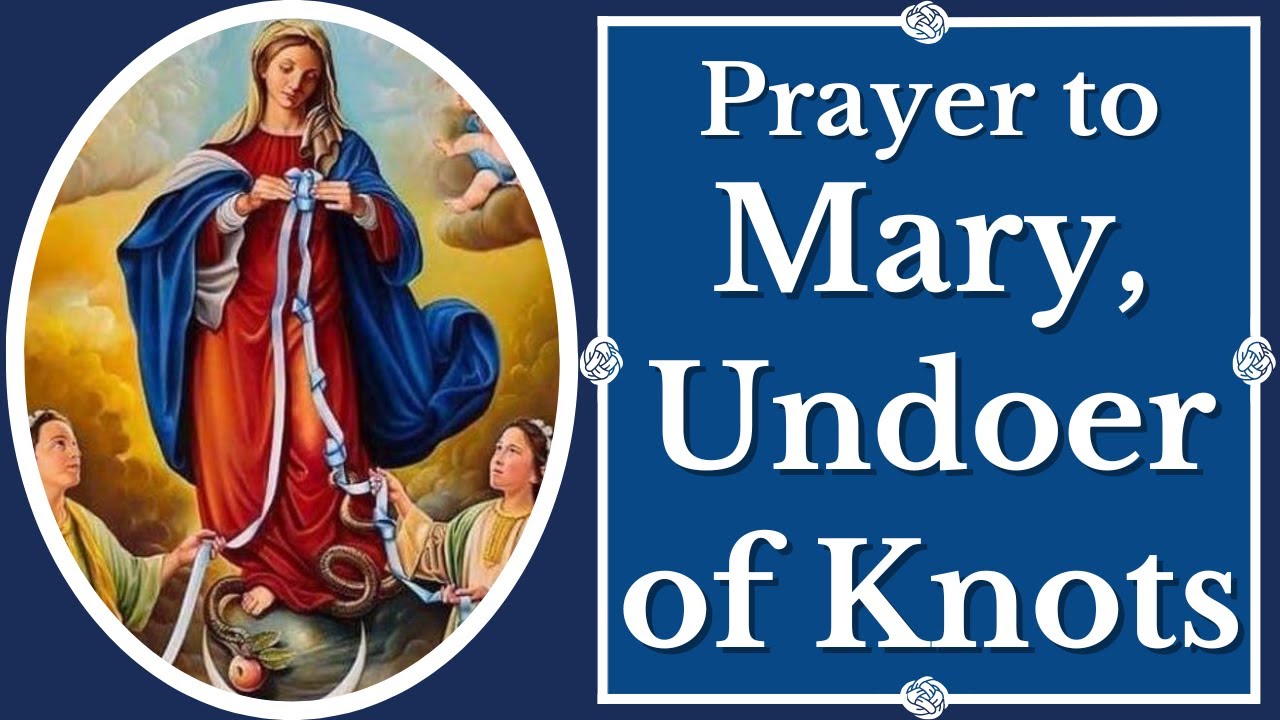
At its heart, the prayer to mary undoer is a plea for compassionate help. It calls upon Mary under a title inspired by an image: Mary gently untying knotted ribbons, symbolising the burdens and tangled circumstances of our lives. The devotion is sometimes practised as a novena (nine days of prayer), but it can also be a simple daily prayer. In either case, its focus is trust, patience, and hope. The title “Mary, Undoer of Knots” highlights her role as a servant of God’s mercy—never replacing God, but interceding with a mother’s care.
Because of its simplicity and the strength of its symbolism, the prayer has spread widely, especially in the last few decades. Many believers keep a small ribbon or string as a reminder that the Lord can untie what seems too complex for us alone. The prayer to mary undoer encourages us not to give up, even when answers arrive slowly or in unexpected ways.


Where the devotion comes from
The devotion to Mary as “Undoer of Knots” has roots in a 17th–18th century Baroque painting from Augsburg, Germany, by Johann Georg Melchior Schmidtner. The image depicts Mary carefully untying knots in a ribbon while trampling a serpent, reflecting her part in God’s victory over sin and confusion. The story often associated with the image speaks of a troubled marriage reconciled through Mary’s intercession, with knots representing difficulties resolved in time.
In recent years, this devotion became more widely known due to the personal interest of Pope Francis, who encountered it during his time in Germany and later encouraged its spread. If you want a concise background on the artwork and its spirituality, you can read this summary of Mary, Undoer of Knots. You can also explore how Pope Francis promoted the devotion and used the symbol of “untying knots” in moments of prayer by visiting Vatican News coverage of the Rosary for untying knots.
Why people pray the prayer to mary undoer
The prayer to mary undoer is often chosen when a situation feels stuck or confusing. Its most common intentions include:
- Strained relationships (marriage, family, or friendships)
- Personal habits and addictions that are difficult to overcome
- Financial or work-related stress and uncertainty
- Discernment of a major decision, vocation, or life change
- Emotional burdens such as anxiety, grief, or fear
The devotion offers a distinctive perspective: you do not need to have a complete solution before you begin. Instead, you bring the knot as it is—imperfect, messy, and complex—trusting Mary to handle it carefully and patiently before God. In this sense, the prayer to mary undoer is not a quick fix but a practice in hope and perseverance.
How to pray the prayer to mary undoer
There is no single mandatory formula. Many follow a longer novena text, while others use a concise daily prayer. The essence is the same: present your intention honestly, ask Mary’s help, and persevere. If you prefer a structured approach, try this simple pattern.
A simple daily structure for the prayer to mary undoer
- Pause and become still. Take a few slow breaths. Name the “knot” you are carrying today.
- Address Mary with a short greeting (for example, “Mary, Undoer of Knots, pray for me”).
- Describe your intention in plain words. Be concrete but gentle with yourself.
- Ask for the grace needed. Perhaps patience, wisdom, courage, forgiveness, or peace.
- Offer a short prayer of trust, such as “I place this knot in your hands.”
- Conclude with a familiar prayer (for example, the Hail Mary), or a moment of quiet.
If you like physical reminders, consider holding a small ribbon or piece of string while you pray. Imagine handing the knot to Mary. This can be particularly consoling when you feel overwhelmed.
Suggested novena approach
If you are drawn to a novena format, pray the prayer to mary undoer for nine consecutive days with the same intention. Keep a brief journal note after each day, recording what you notice: an unexpected conversation, a new insight, a calmer heart, or simply persistence in prayer. At the end of nine days, review what has changed or become clearer. If the knot remains, you might continue patiently or entrust it again at a later time.
Sample text you can use
Here is a short example you can adapt. Use your own words as much as possible—the most meaningful prayer to mary undoer is the one that reflects your heart.
“Mary, Undoer of Knots, loving mother, I bring you this knot in my life: [name it simply]. I do not see the way forward, but I trust in God’s mercy and your gentle help. Please take this knot into your hands and untie it with patience. Obtain for me the grace I need—[name a virtue, e.g., courage, peace, or wisdom]—and help me to follow your Son with a free and hopeful heart. Amen.”
Some prefer to add a Hail Mary or a moment of silence at the end. You can also keep a small ribbon on your desk or bedside table as a visual reminder that the prayer to mary undoer goes on quietly, even when you feel nothing dramatic.
Key principles that make the prayer effective
While spiritual fruit cannot be measured like a formula, many who practise the prayer to mary undoer mention common features that help them persevere:
- Honesty: naming the knot plainly without exaggeration or minimisation.
- Perseverance: returning to the prayer daily, even briefly.
- Openness: being willing to consider new steps, conversations, or reconciliations.
- Patience: allowing time for the untangling, rather than forcing an immediate outcome.
- Gratitude: noticing and thanking God for small signs of progress.
Common mistakes and gentle corrections
- Mistake: Treating the devotion as a guaranteed quick fix. Correction: Use the prayer to mary undoer as a steady path of trust; growth often unfolds in stages.
- Mistake: Not naming the intention clearly. Correction: Be specific—identify one knot at a time so your focus remains clear and calm.
- Mistake: Praying only in crisis. Correction: Pray even on ordinary days; consistency strengthens peace and resilience.
- Mistake: Avoiding practical action. Correction: Be ready to take sensible steps (a conversation, a budget plan, an appointment) as grace prompts you.
- Mistake: Isolating yourself with the knot. Correction: When appropriate, seek wise counsel or pastoral support alongside the prayer to mary undoer.
Bringing Scripture into the devotion
Scripture pairs naturally with the prayer to mary undoer because God’s Word clarifies and encourages. Consider one of these passages as a weekly focus when you pray:
- Luke 1:26–38 (the Annunciation): Mary’s yes to God when the path is not fully clear.
- John 2:1–11 (the Wedding at Cana): Mary’s intercession leading to quiet, transformative help.
- Philippians 4:6–7: A call to pray without anxiety and receive peace.
- Psalm 25: “Untie the knots” theme in the language of guidance, mercy, and trust.
To build a habit of regular prayer, you may find it helpful to explore this readable reflection on perseverance in prayer: what “pray without ceasing” really means. It can complement your practice of the prayer to mary undoer by keeping prayer present throughout the day.
When to use the devotion—and when to seek extra help
Use the prayer to mary undoer whenever life’s threads feel tight: when a conversation keeps going badly, when disappointment weighs heavily, or when you feel blocked in work or study. However, it is also wise to seek practical support when needed. For example, if your knot includes a legal, financial, or medical issue, combine prayer with professional advice. Prayer and action work together; one steadies the heart while the other addresses the tangible steps ahead.
Likewise, if your knot involves a pattern of behaviour you want to change, prayer can accompany a plan for accountability and change. You may find it encouraging to read this gentle guide on turning back to God: how to repent for your sins. Combining personal conversion with the prayer to mary undoer deepens both humility and hope.
Adapting the prayer for families and groups
The prayer to mary undoer can be prayed alone or with others. In families, it can be a simple evening practice: place a ribbon on the table, name the day’s “knot” (for example, “We had a misunderstanding” or “We are worried about this bill”), and pray a short version together. Children often respond well to the concrete image of a knot becoming looser. In parish or community settings, the devotion can be part of a monthly gathering for quiet prayer and mutual support.
Keeping the practice sustainable
To make the prayer to mary undoer a sustainable habit, keep it simple. Choose a time and place you can return to—perhaps at your bedside, on a commute, or during a lunch break. Set the bar low: even three minutes count. If you miss a day, simply start again. Over weeks and months, you will likely notice a steadier spirit, greater clarity, and a more compassionate approach to your own limits.
Recommended external resources
- Background on the title “Mary, Undoer of Knots”: history of the painting, origins, and spread of the devotion.
- Vatican News: Pope Francis and “untying knots”: insight into the Pope’s encouragement of this devotion.
- Loyola Press overview of Mary, Undoer of Knots: a pastoral explanation suitable for all ages.
Practical examples: how the devotion can help
Below are three short examples to illustrate how someone might use the prayer to mary undoer in everyday life. These examples are not promises of outcomes; they are simply snapshots of how the practice can shape your response to difficulty.
- A workplace miscommunication: You pray for three minutes each morning, asking Mary to loosen the knot of pride and fear around a difficult email you must send. You also draft the message slowly, seek feedback from a colleague, and send it with humility. Over the week, tension eases.
- A family rift: You use a nine-day novena, naming the knot of resentment. Alongside prayer, you write a letter that owns your part without blaming. A cautious but genuine conversation follows. It takes time, but the knot begins to loosen.
- Personal anxiety: You pray the prayer to mary undoer during your evening walk. You bring the knot of sleeplessness and fear about finances. You also make a realistic budget and ask for advice. Anxiety does not vanish overnight, but you feel steadier and less alone.
Frequently asked questions about prayer to mary undoer
Is the prayer to mary undoer only for Catholics?
The devotion is rooted in Catholic tradition, but many Christians appreciate its simplicity and symbolism. Anyone who wishes to ask Mary to pray with them can use it, always remembering that Christ is the source of all grace. If you are from a different background, you can adapt the language and focus on the core intent: asking for help to loosen life’s knots.
How often should I pray the prayer to mary undoer?
There is no fixed rule. Some people pray it daily in brief form; others use a nine-day novena during a particularly stressful period. Consistency matters more than length. Even a short daily practice can foster peace and clarity over time.
Do I need a specific text for the prayer to mary undoer?
No. You can use an established text (there are many versions) or pray in your own words. Speak plainly and trustfully. The essential elements are naming the knot, asking for Mary’s help, and remaining open to God’s guidance.
What if my knot seems to get tighter instead of looser?
Sometimes the process of healing or decision-making reveals extra layers of complexity. Keep praying with patience, and take practical steps as they become clear. Consider seeking wise counsel—from a trusted friend, a pastoral leader, or a professional—as you continue the prayer to mary undoer.
Can I pray the devotion for someone else?
Yes. You can place another person’s knot into Mary’s hands, asking for healing, clarity, or peace for them. Respect privacy and avoid sharing sensitive details without permission. The prayer to mary undoer is an act of care, not control.
Is it appropriate to combine this devotion with other practices?
Absolutely. Many find it helpful to combine the prayer to mary undoer with Scripture reading, the Rosary, quiet reflection, or regular acts of charity. These practices reinforce one another, nurturing a hopeful and courageous heart.
Conclusion on prayer to mary undoer
The prayer to mary undoer offers a calm and compassionate way to approach life’s most tangled moments. By placing your knots into Mary’s hands, you learn to trust God’s timing, cultivate patience, and take wise, practical steps as they emerge. This is not a magic formula, but a steady path towards clarity, reconciliation, and inner peace.
Whether you choose a short daily practice or a nine-day novena, let the prayer to mary undoer remain simple and sincere. Name your knot, ask for help, and persevere. Bring Scripture into your routine, and do not hesitate to seek support when necessary. As you walk this path, you may find the knot loosening in ways you did not expect—often quietly, sometimes slowly, but always with a mother’s care.
If you are beginning today, start small: one clear intention, one honest minute of prayer to mary undoer, and one step of trust. Over time, this practice can deepen your hope and free you for the good work that lies ahead.
